
 Call us now:

By Oluwaferanmi Adegoke
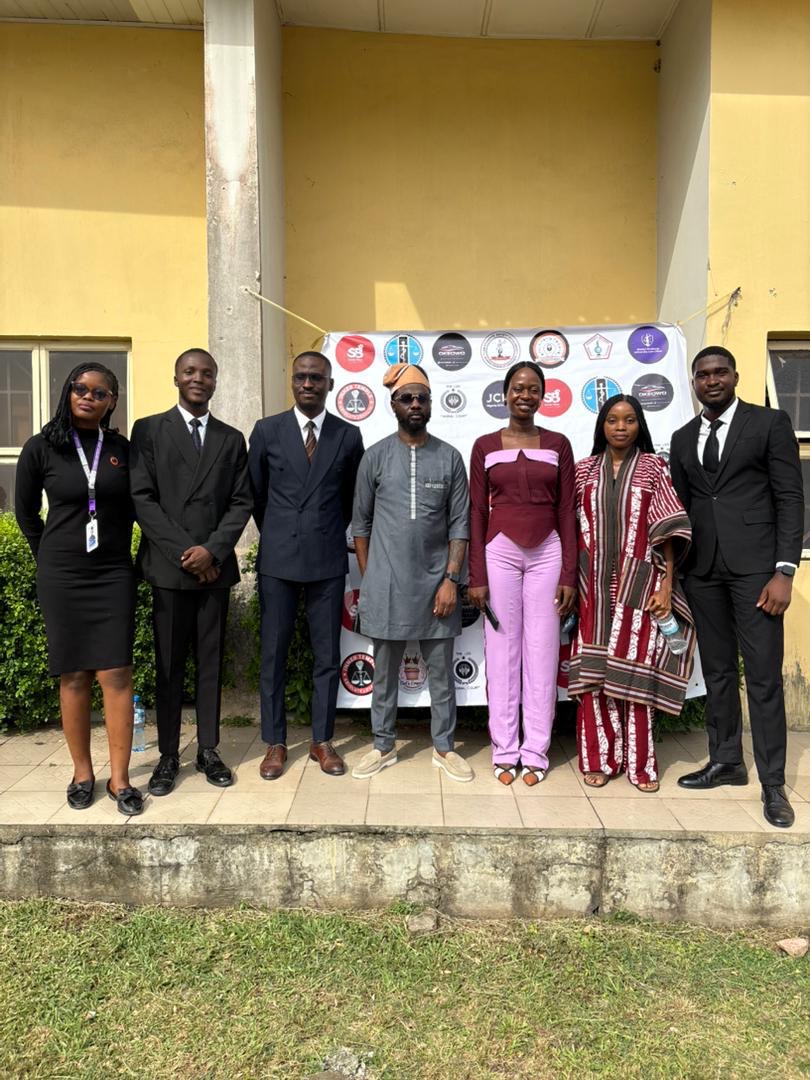
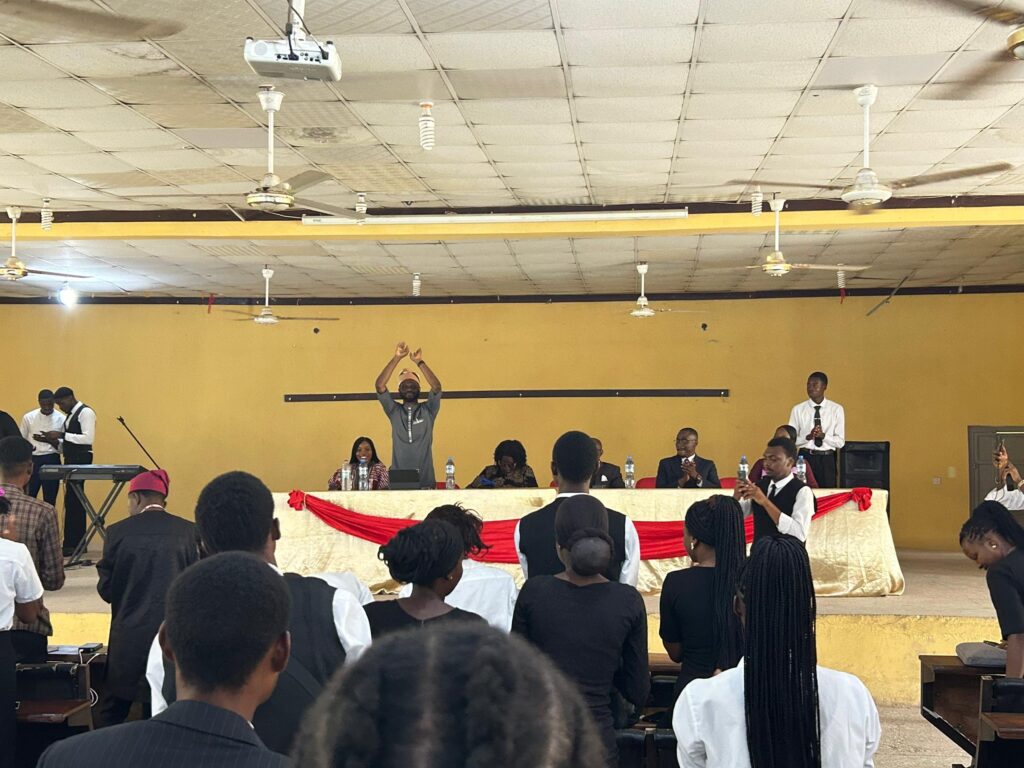
The Intellectual Property Law Club (IPLC) in collaboration with Choral Court recently hosted an insightful and engaging event themed “Creativity Meets Law,” bringing together legal minds, creative professionals, and students under one roof to explore the intersection of law and the creative arts.
The event, which generated key takeaways for its editorial committee, was a celebration of knowledge, storytelling, and the legal frameworks that protect creative work.
Before that, get the photo speak below

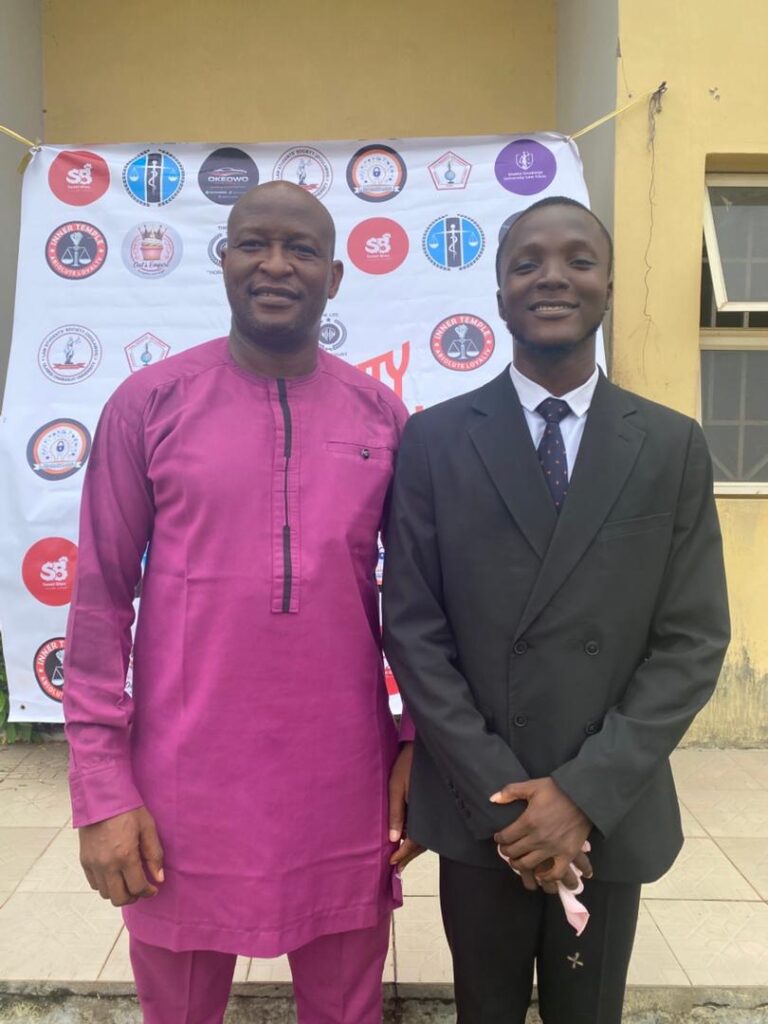
The sequence of events.
Opening Ceremony
The event commenced with a Welcome Address delivered by the IPLC President, David Agbolade, who set the tone for the day by emphasising the importance of intellectual property awareness among Nigerian creatives and law students alike.
Following the welcome address, the IPLC Vice President, Igbagbayemi Taiwo, delivered a comprehensive overview of the club’s activities, vision, and objectives, giving attendees a clearer picture of the role IPLC plays in bridging the gap between legal education and creative practice.
From there, Ogundiaran Omo-fehintola then took the floor and she provide an overview of Choral Court, shedding light on its structure, purpose, and its growing relevance as a platform where creativity and legal thought converge. Her presentation helped contextualise the partnership between IPLC and Choral Court, and why such a collaboration was both timely and necessary.
First Speaker: Miss Peace Akinola — “How Telling Your Story Unlocks Your Capital”
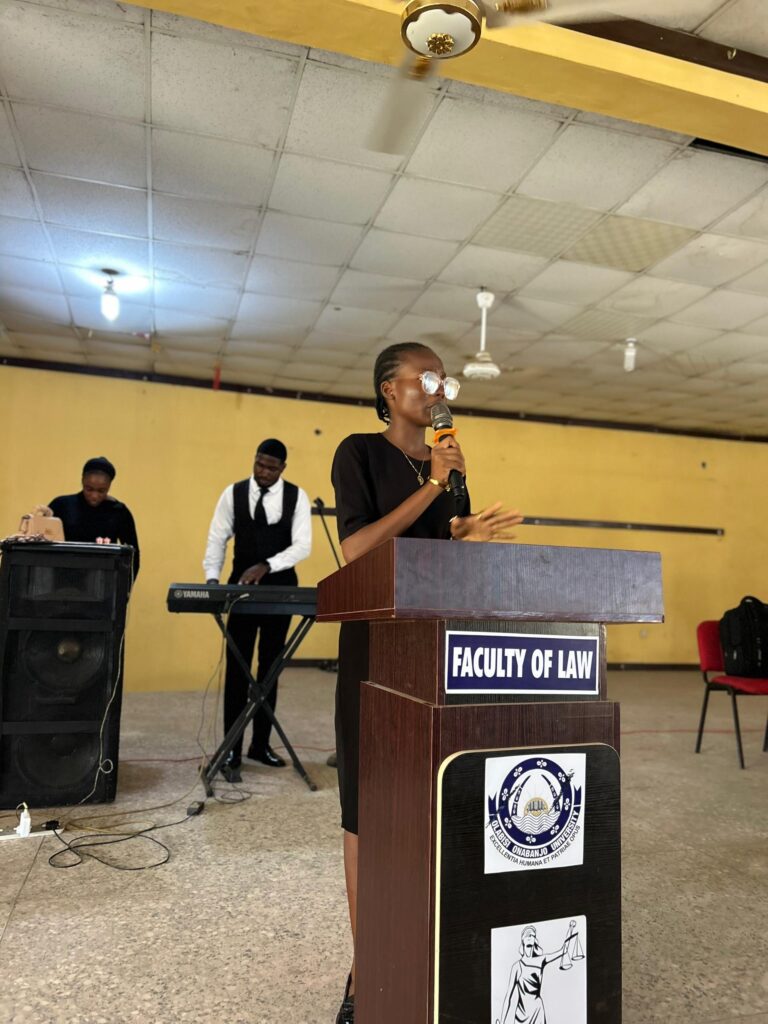
The first and highly anticipated speaker of the event was Miss Peace Akinola, whose presentation drew significant attention and applause from the audience.
Miss Akinola anchored her talk on the power of authentic storytelling as a vehicle for unlocking personal and professional value. She opened with a compelling proposition: that telling your story in the most authentic way possible is one key to unlocking your capital.
She argued that authenticity is the beginning of value — that before a creative can monetise their craft or protect it legally, they must first understand that their story, their unique perspective, is itself their most prized intellectual property.
“The most treasured intellectual property that you need to protect is your value,” she conveyed to the room. “Your story defines your authentic toll.”
Miss Akinola also spoke passionately about the art of storytelling, defining it as “the ability to paint an emotionally realistic picture that can melt even the hardest of heart.”
She challenged creatives in the room to embrace vulnerability and honesty in their narratives, noting that authenticity is not just a creative choice — it is a legal and economic asset.
In a generous gesture that delighted attendees, Miss Peace Akinola gave out copies of books she had authored to a few students. If you’re a beneficiary, do well to comment below.
Second Speaker: Ogechi Tessy “Legal Education as a Creative Asset”
The session continued with a presentation by Ogechi Tessy, who approached the subject from a distinctly academic and legal angle. Her topic, “Legal Education as a Creative Asset,” challenged the conventional separation between legal study and creative work.
Tessy opened by defining legal education as the study of institutions and legal systems, before pivoting to argue that this body of knowledge, often perceived as dry or inaccessible, is in fact a powerful creative tool when properly understood and applied.
She offered several sharp and practical insights that resonated deeply with the audience:
- “Just because you create content doesn’t mean you own it.” She warned that without proper legal understanding and documentation, another person can edit your content, re-purpose it, or profit from it without your consent.
- “Speed does not equal value — don’t charge less based on time.” Tessy challenged the common tendency among creatives to undercharge for their work simply because it was produced quickly. Value, she insisted, is determined by skill and impact — not hours spent.
- “Build your track record, most especially in your season of growth — it becomes your future portfolio.” She encouraged young creatives and law students to document and preserve their work from the very beginning, noting that early output often becomes the foundation of a professional legacy.
- “Never engage in business without a contract.” This was delivered with emphasis, as Tessy stressed that contracts are not a sign of distrust — they are a sign of professionalism and self-respect.
Oghenetega: Content Ownership in the Digital Age
The event also featured a segment on Content Ownership in the Digital Age, in which the audience was reminded of a critical but often overlooked concept: royalty as an ownership percentage.
In an era where digital content is created, shared, and monetised at unprecedented speed, the session highlighted how many creatives unknowingly surrender their rights by failing to understand the legal structures that govern digital platforms.
Attendees were encouraged to acquaint themselves with royalty structures, licensing agreements, and copyright law as essential tools for protecting their digital output.
A particularly striking point made during this segment was the reminder that passion is what sustains a creative but knowledge is what protects them.
The IPLC x Choral Court “Creativity Meets Law” event was by all accounts a resounding success. It achieved something rare: making intellectual property law feel not just relevant, but urgent and personal to every creative in the room.
Report compiled by editorial committee.